these words
US
・UK
A1 sơ cấp
det.từ hạn địnhNhững từ này
These words are difficult to pronounce.
pron.đại từNhững lời này
These words are my promise to you.
phr.cụm từCác từ này
The meaning of these words is not clear in this context.
Phụ đề video
Hiệp sĩ (Knight)
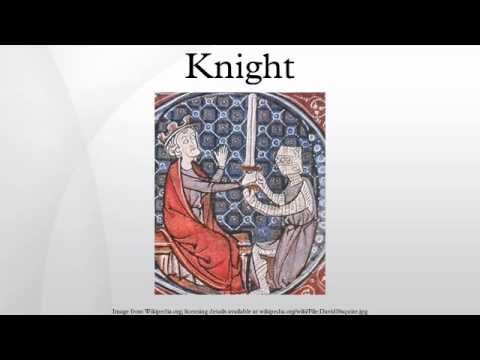
- These words are cognates derived from Germanic ride down to ride, derived from the Proto-Indo-European root reed.
từ Hy Lạp cho ngựa, như Hipparchus và Xanthippe; nhân vật Pheidippides
- Ritter, and Dutch and Scandinavian ridder. These words are cognates derived from Germanic
Ritter, và tiếng Hà Lan và Scandinavia ridder. Những từ này là các từ có quan hệ bắt nguồn từ tiếng German
Cách Từ Ngữ Có Thể Gây Tổn Thương: Crash Course Triết Học #28 (How Words Can Harm: Crash Course Philosophy #28)
- You probably don't want to use these words in polite company.
Bạn có lẽ không muốn sử dụng những từ này trong các cuộc trò chuyện lịch sự.
- These words are used for emphasis, to shock, and to express strong attitudes.
Những từ này được sử dụng để nhấn mạnh, để gây sốc và để thể hiện thái độ mạnh mẽ.
Cải thiện ngữ điệu tiếng Anh của bạn (Improve your English Intonation)

- Listen to this sentence said in two different ways I'm so excited to see you I'm so excited to see you There's a difference in the intonation the ups and downs of the voice Perhaps British English tends to move more compared to your native language Well today I'm going to show you how intonation works in standard British English and afterwards you can practice using my brand new pitch tracker When the vocal folds inside the larynx vibrate more quickly we hear a higher pitch This is high Slower vibrations create a lower pitch This is low The green lines here on my pitch tracker visualize the pitch and help you learn more quickly In English we use pitch patterns called tones to show our attitude and emotions It's like vocal body language The more emotional we are the wider the pitch range Compare these Tones even reflect the grammar They can help us distinguish a statement from a question You did it Let's break down the four main tone patterns you need to know We'll use the word more Repeat after me More More More More And again More More More More We'll go through these tones in turn The fall is used for statements Joe went to London Katie's in a meeting The tone usually starts on the stressed syllable of the final content word Content words are words with real meaning like nouns and verbs Here London and meeting are the final content words And the tone begins on the primary stressed syllable of these words London Meeting Joe went to London Katie's in a meeting I am my mother's daughter I am my mother's daughter The world is difficult to navigate The world is difficult to navigate If you think your voice is a bit flat This is the bit to change Start the fall relatively higher Listen to this difference I want to go to London I want to go to London I want to go to London I want to go to London We also use a falling tone for WH questions What's happening?
Hãy nghe câu này được nói theo hai cách khác nhau: "Tôi rất háo hức được gặp bạn" và "Tôi rất háo hức được gặp bạn". Có sự khác biệt trong ngữ điệu, tức là sự lên xuống của giọng nói. Có thể tiếng Anh Anh có xu hướng thay đổi nhiều hơn so với ngôn ngữ mẹ
- and the tone begins on the primary stressed syllable of these words.
Dùng danh từ chỉ bộ phận cơ thể làm động từ trong tiếng Anh! (Use Body Nouns as Verbs in English!)
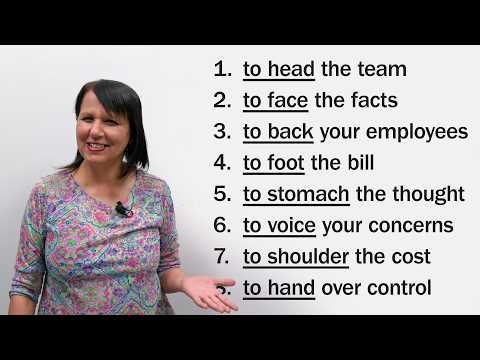
- So, now, let's see how you can match these words with the ideas that they represent, okay?
Hoặc cho...
- So, now, let's see how you can match these words with the ideas that they represent, okay?
Vậy, bây giờ, chúng ta hãy xem bạn có thể ghép những từ này với ý nghĩa mà chúng đại diện như thế nào, được không?
Sự khác nhau giữa 'Borrow' và 'Lend' (Difference Between 'Borrow' and 'Lend')

- and these words have very different meanings, so you need to get it right.
Vì đây là một lỗi rất phổ biến đối với học sinh đang học tiếng Anh.
- And these words have very different meanings.
Thói quen đơn giản này sẽ giúp bạn nói tiếng Anh trôi chảy (có cơ sở khoa học) (This Simple Habit Will Make You Fluent in English (backed by science))

- After collecting all of these words, you can talk to AI.
Khi xem video hoặc đọc chương, bạn sẽ ghi lại tất cả các cách diễn đạt mới, những từ bạn không biết, các mẫu ngữ pháp trông lạ lẫm.
- Make it help you understand subtle nuances of how all of these words are used.
Và rõ ràng, nếu bạn đang theo phương pháp đầu vào dễ hiểu, bạn sẽ không có một danh sách gồm 50 từ mới, 50 cách diễn đạt mới.
Cách nói tiếng Anh HAY HƠN người bản xứ (dễ thôi!) (How to Speak English BETTER Than Native Speakers (it's easy!))

- Most people pronounce these words the same, but they're spelled differently.
Họ đang vui.
- Most people pronounce these words the same, but they're spelled differently.
Hầu hết mọi người phát âm hai từ này giống nhau, nhưng chúng được viết khác nhau.
Nếu bạn muốn nghe giống người bản xứ nói tiếng Anh, đừng nói những câu như thế này (If you want to sound like a native English speaker, stop saying phrases like this)

- So instead of saying "I should have known better," say "I should have known better." "I should have known better." We really contract these words, "should have," into "shoulda." "I should have known better." You may also hear "should have." "I should have known better." They're both variations on the same expression.
Vì vậy, đây là một câu bạn có thể dùng khá thường xuyên.
- "I shoulda known better.." We really contract these words, "should have," into "shoulda."
Những gì chúng ta nói thay vì "xảy ra" trong các tình huống khác nhau (What We Say Instead of “Happen” in Different Situations)
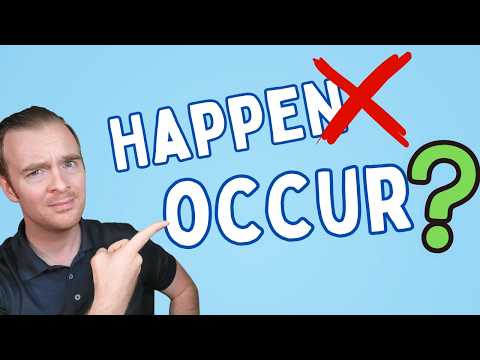
- So when we know or can predict the time or place of an action or event, we usually use "occur." And when we don't know or can't predict the exact time or place, we usually use "happen." Also note that we do not usually use either of these words to talk about planned events.
Trong hầu hết các tình huống, hai từ này về cơ bản có nghĩa giống nhau; tuy nhiên, chúng mang lại cảm giác khác nhau.
- Also note that we do not usually use either of these words to talk about planned events.